I didn’t arrive in Lombok with a perfect plan.
I had a few screenshots on my phone, a half-made list in my notes app, and that familiar travel feeling—equal parts excited and slightly overwhelmed. Lombok looked simple on the map, but once I started zooming in and out, I realized how quickly “nearby” can become “maybe not today.”
So I decided to do something I don’t always do: I let someone local shape the day.
Not in a rigid, packaged way. More like handing the steering wheel of logistics to someone who actually understands the island’s rhythm—where the roads get slow, when the light hits best, and how to move from one place to the next without turning the day into a sprint.
How the Day Really Started
The day started with a short message and a simple pickup.
No dramatic meeting point. No confusion. Just a calm “see you soon,” and then a friendly face who felt like they’d done this a thousand times (because they probably had). Within minutes, we were on the road, and I felt my shoulders drop a little.
That’s one of the best parts of traveling this way: you stop being “the person who must figure everything out,” and you become “the person who gets to notice things.”
And in Lombok, there are a lot of things worth noticing.
The small roadside stalls with colorful fruit stacked like an art display. The quiet morning streets where scooters glide past like they’re in no hurry. The way the scenery changes from neighborhood to open land so quickly you almost don’t believe it.
The Island Feels Bigger When You’re Living Inside It
I used to think islands were easy. You land, you drive a little, you arrive. Lombok taught me a gentler truth: islands can be spacious, and the roads don’t always follow the shortest line between two points.
Some routes curve along hills. Some areas slow down because daily life is happening right on the roadside. Sometimes the best way is not the obvious way—and you wouldn’t know unless you’ve driven it many times.
That’s why, even early in the day, I felt relieved I wasn’t the one making navigation decisions. I could look out the window and actually enjoy the journey instead of watching a screen and worrying about the next turn.
The First Stop Didn’t Need a Big Introduction
Our first stop wasn’t announced like a headline.
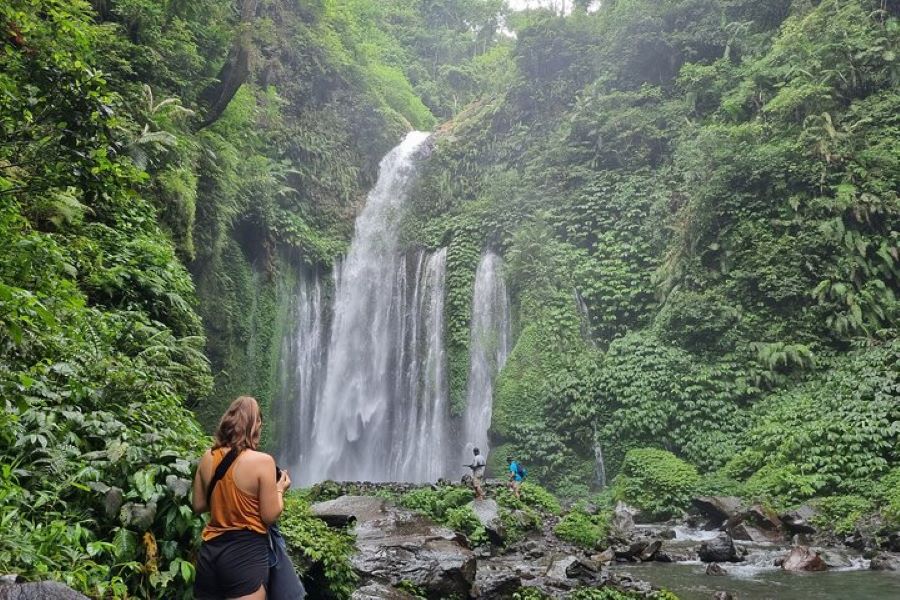
We just arrived, parked easily, and walked a little. The air felt cooler, and I could hear water somewhere in the distance before I could see anything. The path wasn’t intimidating, which I appreciated. I like nature, but I also like the kind of nature that doesn’t demand a huge battle from my legs.
When we reached the water, it felt like stepping into a different mood. You know that moment when your thoughts quiet down because your senses take over? That’s what happened. The sound, the mist, the green around us—it reset my brain in the best way.
I stayed longer than I expected. Not because I had to, but because the place made it easy to linger.
Why Timing Changes Everything
There’s a version of travel that feels rushed even when you’re technically “on vacation.” It happens when you’re always chasing the next stop and constantly checking time, as if relaxation is something you’ll schedule later.
This day didn’t feel like that.
We moved when it felt right. We paused when it felt right. The pacing was smooth, like the day had been shaped to fit a real human mood instead of a tight itinerary.
And I realized something: good timing isn’t only about avoiding crowds or catching the best weather. It’s also about protecting your energy so you can keep enjoying the day without burning out.
The Drive Became Part of the Experience
Some places are all about the “arrive and stay” feeling. Lombok has that too, but it also makes driving feel surprisingly satisfying.
As we continued, the landscape kept shifting. Open land turned into greener stretches. Hills appeared, then faded. The road would straighten for a while and then curve again, giving the feeling that the island was gently guiding us forward.
At one point, we passed a view that made me sit up in my seat. Nothing staged. No sign saying “photo point.” Just a natural opening where the island looked wide and quiet and alive.
We pulled over for a few minutes. I didn’t even take many photos. I just stood there and looked, and it felt like enough.
A Beach Stop That Felt Easy
Later in the day, we headed toward the coast.
The shift was immediate—the air warmer, the light brighter, the feeling more open. We didn’t rush into a long beach agenda. We simply arrived somewhere that felt calm and comfortable, then let the moment do what it does.
I walked slowly along the sand, not trying to “capture” anything. I’ve learned that sometimes the most memorable travel moments are the ones you don’t turn into content. They’re the ones you keep inside your head, because they belong there.
I sat for a while and watched the water. People came and went. The ocean stayed steady, like it had all the time in the world.
The In-Between Moments Were My Favorite
A lot of travel advice focuses on the big highlights, but my favorite parts of the day were the small, quiet moments between destinations.
A quick stop for a drink when the sun got stronger. A short chat that made me laugh. A stretch of road where I rolled down the window just to feel the air.
We passed villages where daily life looked honest and unfiltered—people working, kids playing, locals chatting without any sense that they were being watched. It reminded me that Lombok isn’t a stage. It’s a real place with its own pace.
And that’s exactly what I wanted.
When You Don’t Have to Think About Logistics, You Feel More Present
There’s a mental weight that comes with traveling independently, especially in a place you don’t fully know yet.
Where to park. Which entrance to use. Whether the road ahead is the right one. How long it will take to reach the next stop. Whether you’re accidentally wasting time.
That weight disappeared for me that day.
I didn’t have to solve small problems every hour. And because I wasn’t constantly solving problems, I had more attention for the actual experience—sounds, views, conversations, little details.
It’s amazing how much “vacation” you get back when your mind isn’t busy.
A Midday Pause That Felt Like the Point of the Whole Day
Somewhere around midday, we stopped at a quiet viewpoint again. Not a dramatic platform, just a spot where the road opened up to something wide and beautiful.
I remember thinking: I’m not tired.
Normally by midday, I would already feel a little drained from decision-making, from moving quickly, from trying to do too much. But this time, I felt light—like the day was carrying me instead of me dragging myself through it.
I took a long breath and realized: this is what I wanted from Lombok.
A day that felt smooth, human, and real.
And if you want to shape a day like this with someone who knows the island well, you can check Lombok tour.
The Afternoon Felt Softer, Like the Island Was Exhaling
In the afternoon, the light changed. Everything looked warmer. Shadows stretched out gently. The island felt quieter, even if nothing had actually changed.
We didn’t try to pack in a dozen stops. We let the day breathe. We made a couple of short pauses, drove through scenic areas, and kept the pace comfortable.
That’s when I realized something else: traveling well isn’t about squeezing the most places into one day. It’s about shaping a day that feels good from start to finish.
If you end the day feeling calm instead of exhausted, you’ve done it right.
The Details That Build Trust
People talk about trust in travel services like it’s some big dramatic promise. But for me, trust is built in small, steady details:
- clear communication
- smooth pickup
- calm pacing
- simple coordination
- no awkward confusion about where to go next
Those things might not sound exciting, but they are the reason your day feels enjoyable.
When those details are handled well, you stop worrying, and you start experiencing.
The Best Part: The Day Still Felt Like Mine
Even though someone else handled the driving and the route flow, the day never felt like I was being pushed around.
If I wanted to stop longer, we stopped longer. If I wanted a quick pause, we paused. If I wanted to move on, we moved on.
That balance matters. Because the best days aren’t the ones that feel “perfect.” They’re the ones that feel personal.
And that day felt personal—like the island met me where I was, instead of forcing me into a strict plan.
If You’re Visiting Lombok, This Is the Approach I’d Choose Again
If I went back tomorrow, I’d choose the same style of exploring.
Not because it’s the only way, but because it’s the way that let me enjoy Lombok without turning it into a puzzle. It let me focus on the scenery, the calm, and the feeling of being somewhere different.
I didn’t leave the island thinking, “I saw everything.”
I left thinking, “I actually felt it.”
And that’s the kind of trip I always hope for, even when I don’t know how to plan it at first.